Often when I complete a keyword research project for a client, they
ask me about keywords I may not have included, or they want to know what
the relative competition on the keywords looks like. This happens often
enough that I thought I would remind everyone that while research for
SEO and PPC can go hand in hand, they’re actually very different.
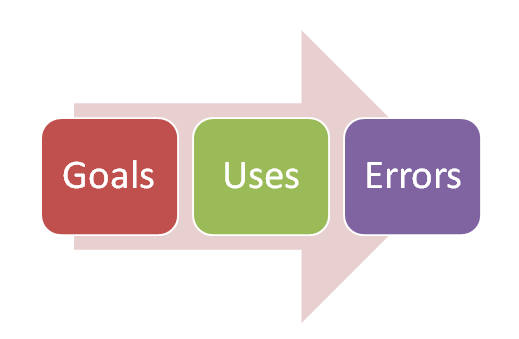
First, think about what your goals are with each medium. What are you
trying to do, and what constitutes success in that area? Next, think
about how the keywords will be used. Where, when, how often?
Finally, consider what your margin for error is. If you don’t get exactly the right keyword, what’s the penalty?
What… Is Your Quest?
In SEO, your goal should be to understand the keyword landscape of a
topic. What keywords do people search for, and what does this tell us
about their intent? What can we learn from looking at keywords in a
broader context?
For PPC, your goal should be to find the keywords that you can bid
on. Which keywords are going to make you the most potential money for
your cost-per-click investment?
You should focus on keywords that suggest a purchase (or goal
completion), that represent a category area that is profitable for you,
and that you can’t easily get ranked for in organic (most of the time –
there are exceptions to this).
What… Is The Air-Speed Velocity Of An Unladen Swallow?
Let’s start with PPC this time. And no, I don’t know the airspeed of a
swallow, laden or unladen, so I’d be thrown into the abyss. But I do
know PPC.
You’ll use the keywords in your campaigns and ad groups, in your ad
copy, and on your landing page. You want to have a very tight
correlation between each so that your Quality Score is high. This is
pretty much it in terms of how you will use your PPC keywords.
For SEO, you’ll use these keywords as the foundation of everything
that you do. Ideally, you’ll correlate your existing content on your
website with them, find the gaps, and decide if you want to create
additional content to fill those gaps.
You’ll identify a focus keyword or two for each page on the website,
and correlate the meta tags, title, and content to match the focus
keyword. You’ll also use those keywords to track and benchmark your
ranking progress. I’ve created a handy image below that explains this.

Keyword uses for SEO and PPC, plus the margin for error
Understand The Margin Of Error For SEO & PPC Keywords
In SEO, your margin for error is very large. If you use a keyword in a
way that just doesn’t work, you’ll adjust it and try again. You may
find yourself ranking for or getting traffic for keywords you didn’t
think about. Those are a bonus, and you can just add them into your
reports as needed.
You’ll also want to refresh your keyword research every now and then
to make sure there aren’t new advances, technologies, products or ideas
that weren’t popular when you first did your research.
Since SEO doesn’t cost a fee per keyword, you won’t (or you
shouldn’t) shy away from high competition words that you may not get. It
doesn’t hurt you at all to continue competing for those, and if
anything, it makes it easier to qualify for many longer tail keywords.
Plus, on the user experience side, it makes your site much cleaner,
because instead of having headings like “Wedding Accessories for Dog
Ring Bearers”, you can stick with “Wedding Accessories” or the more
specific but still high volume “Ring Bearer Pillows”. It’s important to
adjust the depth of the keyword to the depth of the site, with top level
pages using broader keywords and sub-categories being much more
specific.
Conversely, the margin for error in PPC is small. Every mistake costs
you money. Every keyword that you bid on puts you in direct monetary
competition with other sites. You need to go over your keywords with a
fine tooth comb, cutting out any that aren’t working, adding negatives,
expanding to new opportunities, and always with one eye on the cost per
click and the other on the Quality Score.
You need to make sure your keywords are tightly categorized by theme,
that your ad copy is performing as well as it possibly can, and that
your tight ad group/keyword strategy extends to your landing page and
the way keywords are used on it. The efforts must be meticulous and
calculated.
So the next time you are tempted to ask your consultant why they
didn’t include competition metrics in an SEO keyword list, or why PPC
categories are done by keyword rather than intent, think about the
differences between the two mediums. And remember that just because data
is available, it doesn’t mean it is necessarily useful in all contexts.


No comments:
Post a Comment